Grace's Death
I'm Still Here- What didn't kill me made me stronger and sharperGrace McCall’s death is a defining loss in Jensen Brick McCall’s history and the source of a hard-earned boundary he later sets with Janae Morrison: he will support someone’s recovery, but cannot undertake it for them. His account links Grace’s concealed drug use and death to the limits of promises made without sustained change, while leaving the precise medical cause of her death unstated.
The Woman Who Raised Him
Jensen describes Grace McCall as the woman who raised him. She had also been the nurse who first cared for him after his birth; when his biological mother, Gloria Simpson Picou, said the surviving infant should be left to die, Grace helped save his life. The person who became his mother through care therefore stands at both ends of his earliest history: she protected him as a newborn, then became the central loss of his childhood.
Relapse and Death
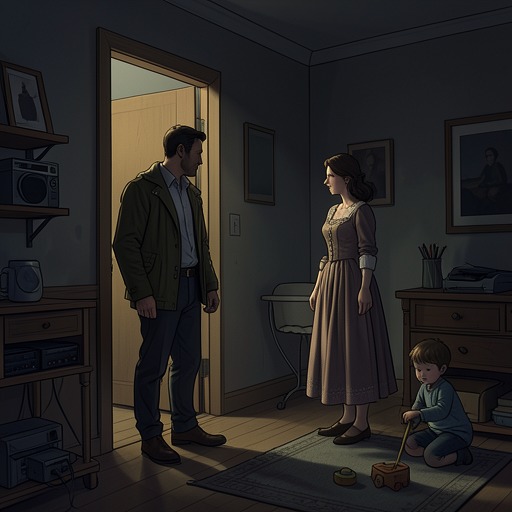
In recounting Grace’s decline, Jensen says she promised to stop taking prescription drugs for his sake. She went to meetings, but for a year concealed that she was still taking Valiums and smoking water. Her condition worsened; she lost her job after stealing codeine, continued taking pills, and one day Jensen came home and found her dead. The account establishes the sequence of addiction, deception, declining circumstances, and death, but does not specify a medical cause or describe the circumstances of her final moments.
The Story Jensen Tells Janae
Jensen shares this history while responding to Janae’s fear of being judged and her struggle with addiction. Grace’s promise to change, followed by a year of secrecy, gives his warning its personal force: he does not want Janae to make a promise for his sake that she will not keep for herself. He frames support as possible, but insists that another person cannot substitute for the addict’s own decision to seek change.
The disclosure is not an abstract lesson in his telling. It is tied to the experience of returning home to find the woman who raised him dead, and to a relationship in which care and harm coexist. Jensen can remember Grace as the person who saved him and as someone whose addiction ended in a loss he could not prevent.
Aftermath and Narrative Significance
Jensen’s account of Grace’s death sits within a broader history of abandonment and hardship. He recalls sleeping on library steps, being raped, and being treated as an unwelcome guest and merely a foster kid. He later describes himself as having lived when he was expected to die, and presents the effort to understand why he survived as part of his search for purpose. The text does not attribute every later hardship to Grace’s death, but her loss forms one part of the history through which he understands survival and pain.
The story also complicates Jensen’s later family history. He eventually learns that Gloria concealed her pregnancy and that his family did not know he was alive until years later; Grace, by contrast, is identified as the nurse who intervened and the woman who raised him. The distinction makes his account of motherhood inseparable from both abandonment and rescue. In telling Janae what Grace’s concealed addiction cost, Jensen turns a private bereavement into a boundary about honesty and recovery, without pretending that love alone could have saved Grace.